Why first-party event data is now a board-level issue for UK exhibitors
First-party event data has shifted from a nice-to-have to a board mandate. With the UK’s evolving data protection regime, the proposed Data Protection and Digital Information Bill tightening expectations around data sharing, and the ICO escalating enforcement of unlawful marketing, UK exhibitors that still lean on rented lists are carrying legal risk while leaving revenue on the table. In B2B event marketing, the exhibitors who treat every in-person event as a data-driven asset, not a one-off cost, are the ones now reporting structurally higher ROI and more predictable sales pipelines.
Industry benchmarks from CRM and marketing automation vendors such as HubSpot, Salesforce, and Adobe, combined with consulting analyses from firms like McKinsey and BCG, indicate that robust first-party data strategies can deliver around 60–80% higher marketing ROI than third-party alternatives, while also improving customer acquisition costs by roughly 70–85%. These figures are drawn from aggregated campaign performance across multiple sectors rather than a single study, but the directional impact is consistent: this is not a marginal gain; it is the difference between an event strategy that funds its own growth and one that is constantly under budget pressure from finance. When you position events as long-term data assets, every attendee interaction, every piece of event content, and every networking conversation becomes a measurable input into your wider marketing strategy and revenue model.
Yet most UK exhibitors still treat event data as an afterthought rather than the core of their B2B event strategy. Surveys from organisations such as the Event Marketing Institute and Cvent suggest that around 55% of marketers fail to extract the full potential from event data, and only about 20% integrate event tech properly with their marketing infrastructure. That gap between aspiration and execution is where event success is won or lost, because decision makers now expect data-driven accountability for every pound spent on event planning, event management, and on-site engagement.
What really counts as first-party event data for exhibitors
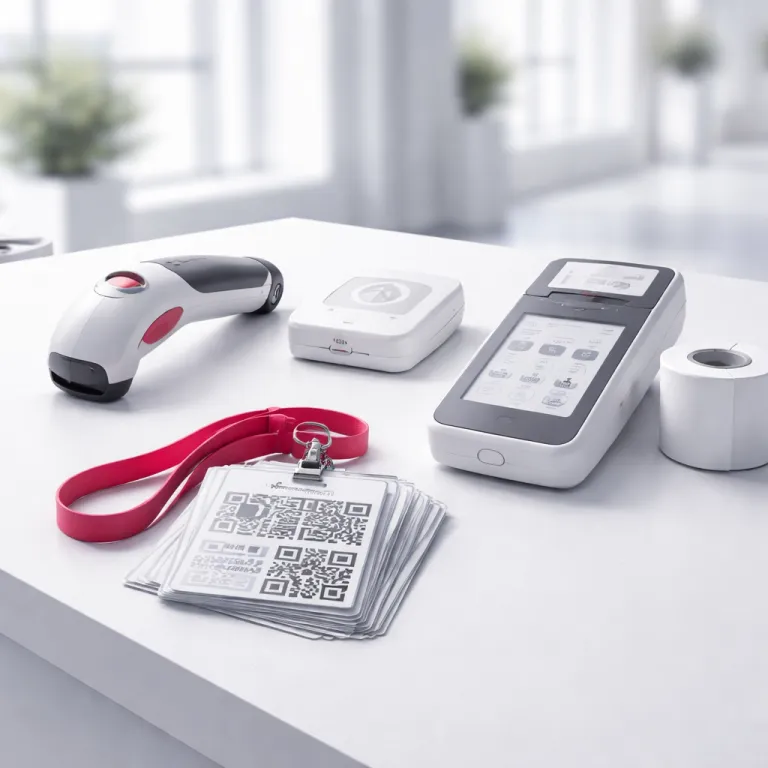
For a serious B2B event data programme, first-party data is anything you collect directly from an attendee with clear consent and a defined purpose. Badge scans at ExCeL London or the NEC count, but only as a starting point; the real value comes from enriched interaction data such as session attendance, questions asked, downloads of event content, and participation in networking events. When exhibitors combine these signals with explicit intent data from demos, pricing conversations, and post-event surveys, they move from generic leads to qualified opportunities with measurable revenue potential.
Think about a large manufacturing trade show at the Birmingham NEC where your stand team runs live product clinics every hour. A simple badge scan tells you who the attendee is, but a structured capture flow records which product line they discussed, what buying timeframe they indicated, and whether they requested a follow-up from sales. That richer event data turns a list of names into a segmented target audience, enabling marketers to run tailored event marketing campaigns through email and social media that speak directly to the attendee’s stated needs and buying stage.
Contrast that with exhibitors who still rely on rented lists or generic audience data from organisers, often with weak consent trails and limited transparency. Those lists may inflate the apparent volume of leads, but they rarely translate into event success, because engagement is shallow and sales teams struggle to prioritise follow-up. The shift to first-party event data is not just about compliance; it is about building a repeatable marketing strategy where every event, from niche networking events in Manchester to major in-person shows at Olympia, feeds a single, coherent view of the customer journey.
For a deeper look at how narrative, access models, and audience expectations are reshaping B2B event strategy, the analysis on how a Scottish motorcycle show’s free expo pass narrative is reshaping B2B event strategy shows how even consumer-facing formats can inform smarter data capture in business events.
The compliance landscape: from the Data (Use and Access) Act to ICO scrutiny
Compliance is now inseparable from any credible B2B event data strategy, especially for UK exhibitors handling large volumes of attendee information. While the Data (Use and Access) Act label is often used loosely in industry commentary, the real guardrails come from UK GDPR, the Data Protection Act 2018, the Privacy and Electronic Communications Regulations (PECR), and forthcoming reforms under the Data Protection and Digital Information Bill, all of which tighten the rules on how organisations share and access data. Together with the ICO’s published guidance on direct marketing and recent enforcement actions, these frameworks make it harder to justify broad data exchanges between organisers, sponsors, and exhibitors without explicit, granular consent. At the same time, the extraterritorial reach of the EU AI Act adds complexity for global brands using AI tools to analyse event data in real time.
For exhibitors, the practical pressure points sit around consent at badge scanning, transparency in event content registration flows, and the lawful basis for follow-up communications after events. If your stand team is scanning badges at a London Tech Week networking reception, you must be able to show that the attendee understood who would contact them, for what purpose, and through which channels such as email or social media. That means rethinking pre-event registration pages, on-site signage, and event follow scripts so that marketing and sales engagement remains both effective and defensible when challenged by regulators or cautious decision makers.
Compliance also extends to how quickly and securely you move event data into your CRM and marketing automation platforms. Spreadsheets emailed around the business, or USB exports from event management tools, are no longer acceptable when you are handling thousands of attendees across multiple events each quarter. Modern exhibitors are turning to integrated, AI-native field and event marketing platforms that support real-time attribution and consent-aware data flows; the analysis of what real-time attribution looks like in field and event marketing illustrates how this new generation of tools is closing the gap between on-site engagement and compliant, data-driven follow-up.
Designing a capture and activation strategy that serves both ROI and legal obligations
A high-performing B2B event data approach starts long before your stand team arrives on site. During the pre-event phase, marketing leaders should define a clear data schema that specifies which attendee attributes, engagement signals, and intent data points they need to capture for both attribution and compliance. That schema should align with your CRM fields, your sales qualification model, and your legal team’s guidance on what constitutes fair, transparent processing of personal data in the context of events.
On site, the capture strategy must be embedded into every element of event planning and event management, from the design of lead forms on tablets to the scripts used by staff during networking events. A simple rule helps: if a piece of data does not support a defined marketing strategy, sales motion, or legal requirement, do not ask for it, and if you do ask, explain clearly why it matters to the attendee. This disciplined approach reduces friction at the stand, improves engagement rates, and ensures that every data point collected can be justified when challenged by the ICO or internal risk teams.
After the show, the same discipline must carry through into post-event workflows, where many exhibitors still lose value. The critical window is the first 24 to 48 hours after the event, when badge scans often sit in a portal, spreadsheets circulate by email, and sales teams move on to other priorities. To avoid this activation gap, data should flow automatically from event tools into your CRM within that timeframe, enriched with event content interactions, session attendance, and any notes from sales conversations. When that happens, marketers can trigger segmented nurture journeys for different audience cohorts, sales teams can prioritise follow-up based on intent signals, and leadership can see a clear line from event investment to pipeline, revenue, and long-term customer relationships.
Closing the activation gap: from badge scans to pipeline within 48 hours
The harsh reality is that most exhibitors already collect enough event data to justify their budgets, but they fail to activate it quickly enough. The activation gap usually appears in the 48 hours after events, when badge scans sit in a portal, spreadsheets circulate by email, and sales teams move on to other priorities. By the time the data reaches your CRM, the attendee’s memory of the experiences and networking conversations has faded, and your follow-up feels like generic marketing rather than a continuation of a specific business discussion.
To close this gap, UK marketers need to treat the first 48 hours post-event as a critical SLA, not an administrative afterthought. That means designing workflows where event data flows automatically into your CRM and marketing automation platforms, tagged with event names, sessions attended, and engagement scores that reflect both quantity and quality of interactions. When sales receives a prioritised list of leads, complete with context about the attendee’s interests and agreed next steps, they can follow up with relevance, increasing conversion rates and shortening the sales cycle.
This is also where many exhibitors misread event success by focusing on vanity metrics such as badge scan volume rather than pipeline impact. A more rigorous approach, outlined in the analysis of why badge scans are not a reliable metric for exhibitor success, argues for harder KPIs such as meetings booked, opportunities created, and revenue influenced. When your B2B event data strategy is wired into those metrics, every decision about event marketing, stand design, and staffing becomes a lever for measurable ROI rather than a speculative bet.
Building the right tech stack for first-party event data in B2B
A modern B2B event data strategy depends on a tech stack that connects capture, consent, and activation without manual workarounds. At the core sits your CRM, which should act as the single source of truth for all attendee and account-level data across events, campaigns, and sales activities. Around that core, you need event management platforms, lead capture apps, and marketing automation tools that can exchange data in real time through secure APIs while preserving consent metadata and audit trails.
For UK exhibitors, the practical question is not whether to invest in event tech, but which capabilities are non-negotiable for compliance and ROI. At a minimum, your tools should support configurable event content forms with explicit consent options, on-stand lead capture that works both online and offline, and automated post-event workflows that route leads to the right sales teams based on territory, sector, or account status. More advanced setups incorporate intent data scoring, AI-assisted lead notes, and dynamic segmentation that adapts to attendee engagement across multiple events and digital touchpoints.
Integration is where many organisations still struggle, as shown by the fact that only around 20% of companies fully integrate event tech with their broader marketing infrastructure. To break that pattern, marketing leaders should map the full journey of event data from pre-event registration through on-site engagement to post-event nurture, identifying every system that touches the data and every handoff that could introduce delay or risk. When that map is clear, you can rationalise tools, standardise processes, and ensure that your B2B event data framework supports not just individual campaigns, but a coherent, long-term view of your target audience and their evolving needs.
Event data and privacy: what senior marketers must own personally
For CMOs and Marketing Directors, event data is no longer something that can be delegated entirely to events teams or agencies. The combination of higher ROI from first-party data, stricter regulation, and rising expectations from decision makers means that accountability now sits squarely at the top of the marketing organisation. When events represent a significant share of your marketing budget, the way you handle attendee data, engagement signals, and follow-up processes becomes a direct reflection of your leadership on both growth and governance.
Senior marketers should therefore own three things personally: the definition of what event success means in financial and compliance terms, the standards for how event data is captured and activated, and the narrative used internally to explain why first-party data matters. That narrative should be simple enough for stand staff to repeat, yet robust enough to satisfy legal and finance stakeholders who scrutinise event planning decisions. When everyone from the C-suite to the person scanning badges understands that events are long-term data assets, not one-off costs, behaviours change quickly on the show floor and in the CRM.
There is also a cultural dimension, because teams that see events as data-driven learning opportunities tend to innovate faster and adapt better to shifts in audience behaviour. They experiment with new formats for networking events, refine event content based on real-time feedback, and use social media listening to understand how attendees talk about their experiences beyond the venue. Over time, that mindset compounds into a competitive advantage, as your B2B event data strategy becomes a living system that informs product decisions, sales plays, and brand positioning, not just a reporting exercise after each show.
Key statistics on first-party event data and exhibitor performance
- First-party event data strategies are associated with roughly 60–80% higher marketing ROI than third-party alternatives, according to aggregated CRM industry benchmarks from providers such as HubSpot and Salesforce and consulting analyses from firms like McKinsey, which explains why leading UK exhibitors are pivoting away from rented lists toward direct attendee relationships.
- Organisations that invest in first-party data strategies have reported improvements in customer acquisition costs of roughly 70–85%, based on meta-analyses of data-driven marketing performance by firms such as McKinsey and BCG, showing that better data quality reduces wasted spend across the marketing funnel.
- Approximately 55% of marketers still fail to extract the full potential from event data, highlighting a persistent execution gap between data collection at events and meaningful activation in sales and marketing workflows.
- Only about 20% of organisations have fully integrated their event tech with core marketing infrastructure such as CRM and marketing automation platforms, leaving most exhibitors with fragmented views of attendee engagement across events.
- Industry consensus from major organisers such as EMS Events indicates that events are increasingly treated as long-term data assets rather than one-off costs, shifting how budgets are allocated and how event success is measured.
FAQ: event data strategy B2B and privacy for UK exhibitors
What is first-party event data for a B2B exhibitor?
First-party event data is any information you collect directly from an attendee during registration, on-site interactions, or post-event engagement, with clear consent and a defined purpose. It includes basic contact details, session attendance, content downloads, questions asked, and explicit signals of buying intent captured at your stand. Because you collect it yourself, this data is more accurate, more relevant to your business, and easier to defend under UK data protection law than third-party lists.
How does the Data (Use and Access) Act affect exhibitor data practices?
The phrase “Data (Use and Access) Act” is often used informally to describe the UK’s tightening approach to data governance, but in practice exhibitors should focus on complying with UK GDPR, the Data Protection Act 2018, PECR, and any changes introduced by the Data Protection and Digital Information Bill. These frameworks directly impact how organisers, sponsors, and exhibitors exchange attendee information. Exhibitors must ensure that any data they receive from organisers is backed by explicit consent that covers their specific marketing and sales activities, and they should review contracts, privacy notices, and event registration flows to ensure that data sharing is transparent, proportionate, and aligned with ICO guidance on direct marketing.
Why is first-party event data more effective than rented lists?
First-party event data is more effective because it reflects real engagement and intent from people who have chosen to interact with your brand at events. Rented lists often contain outdated or poorly segmented contacts, leading to low response rates and higher unsubscribe levels when you launch campaigns. By contrast, data from your own events allows you to tailor follow-up based on specific conversations, content consumed, and networking experiences, which typically results in higher conversion rates and stronger long-term relationships.
What should I prioritise in my event tech stack to support compliance?
You should prioritise tools that capture consent clearly, integrate seamlessly with your CRM, and support automated, auditable data flows from pre-event registration to post-event follow-up. Look for event management platforms and lead capture apps that store consent flags, time stamps, and purposes alongside each attendee record, so you can demonstrate compliance if challenged. Integration capabilities are critical, because manual exports and spreadsheets increase both compliance risk and the chance that valuable event data never reaches your marketing and sales teams.
How quickly should event leads be followed up after a show?
Best practice is to have all qualified event leads in your CRM and routed to sales within 24 to 48 hours after the show closes. This timeframe keeps your brand and the event experiences fresh in the attendee’s mind, making it easier for sales to reference specific conversations and content. Delays beyond this window reduce engagement rates, weaken your B2B event data strategy, and make it harder to prove ROI when you report back to the board.