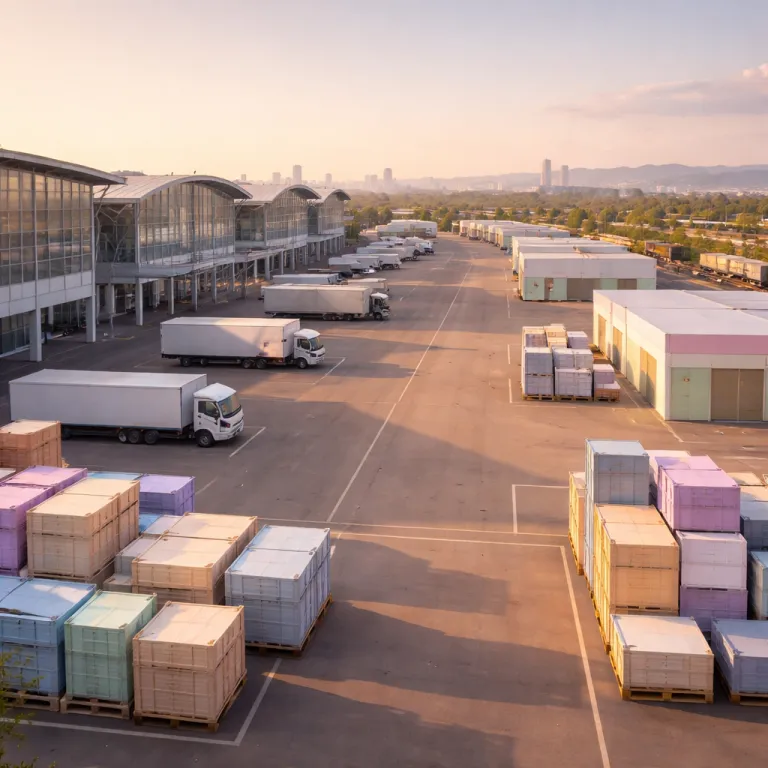
Why German trade fairs outperform UK shows for procurement outcomes
For UK operations and procurement leaders, German trade fairs offer a different order of magnitude in supplier access. The combination of international scale, dense industry clustering, and rigorously managed exhibition grounds in Hannover, Frankfurt, Munich, Berlin, Cologne, Stuttgart, Hamburg and Düsseldorf creates a sourcing environment no domestic venue yet matches. When you benchmark major German exhibitions against even the leading international event in London, the gap in qualified supplier meetings per hour is hard to ignore.
Hannover Messe remains one of the world’s largest industrial trade fairs, drawing around 130,000 visitors and thousands of exhibitors across automation, energy, logistics and future-of-work technologies, according to the organiser’s post-show reports. That scale translates into international sourcing optionality for UK buyers, who can compare German and global suppliers from Europe, Asia and North America in a single exhibition centre over just a few days. For an operations team under pressure to de-risk supply chains, Europe’s leading industrial events like Hannover Messe compress two or three months of supplier research into one concentrated visit.
Frankfurt and Munich complement Hannover with different industry strengths, making German trade fairs for UK procurement a portfolio play rather than a single trip. Messe Frankfurt hosts Automechanika Frankfurt, a leading trade fair for the global automotive aftermarket, and IMEX Frankfurt, a major business events exhibition that attracts around 3,500 exhibitors and a truly international audience, as reported in recent show statistics. Munich, by contrast, is home to Munich Fabric Start and related textile shows, which give apparel and technical textile buyers access to promotional products, fabric innovations and Europe’s largest specialist mills in one of the continent’s most efficient exhibition grounds.
The three German fairs that matter most for UK procurement teams
For industrial and process-focused UK organisations, three German trade fairs consistently deliver the strongest procurement ROI. Hannover Messe, Achema in Frankfurt, and Automechanika Frankfurt each serve a distinct slice of industry, yet together they cover most capital equipment, process technology and automotive aftermarket needs. Treat them as a structured calendar of German trade fairs for UK procurement rather than isolated trips.
Hannover Messe is the anchor event, a leading international trade fair where digitalisation, robotics, energy systems and future-work concepts converge across multiple exhibition halls. UK visitors can move from high-security access control technologies to collaborative robots and industrial software within minutes, using the Messe shuttle network to cross one of Europe’s largest exhibition grounds efficiently. A documented case study from the UK’s Department for Business and Trade describes how a mid-sized British engineering firm used Hannover Messe to identify three alternative component suppliers, one of which later secured a multi-year contract that reduced unit costs by 8% and shortened lead times by four weeks, illustrating how international trade fairs can directly support operational resilience.
Achema, held at Messe Frankfurt’s exhibition centre, is the leading trade platform for process industries, from chemicals and pharmaceuticals to food and environmental technologies. For UK buyers, Achema’s international exhibitor base means side-by-side comparisons of pumps, valves, analytics and plant engineering from hundreds of German and global suppliers, something no single UK fair can replicate. Automechanika Frankfurt then completes the trio as a leading international trade fair for the automotive aftermarket, where a UK-based supplier recently gained market insights that justified a product line expansion and reinforced the value of German trade fairs for UK procurement. As one procurement manager from a UK automotive OEM put it after attending Automechanika, “We achieved more qualified supplier conversations in two days in Frankfurt than in six months of separate site visits.” For readers used to UK security and technology shows, the hosted buyer discipline at these events is closer to the curated access you see with a premium pass at Infosecurity Europe in London, but executed at continental scale.
What the German model offers that UK venues still lack
The structural advantages of German trade fairs for UK procurement start with scale but go far beyond square metres. German Messe operators in Hannover, Frankfurt, Munich, Cologne, Stuttgart, Hamburg, Berlin and Düsseldorf treat each event as an integrated marketplace, not just an exhibition. Hosted buyer programmes, audited matchmaking and data-driven floor planning are standard features, not premium add-ons.
Messe Frankfurt, for example, has begun auditing exhibitor waste and enforcing sustainability standards, raising the bar on how international exhibition organisers manage environmental compliance, as outlined in its published sustainability reports. That level of operational discipline matters for UK procurement teams, because it signals which suppliers can meet tightening ESG requirements and which still treat sustainability as promotional messaging rather than embedded practice. When you walk a leading trade fair in Frankfurt or Munich, you are not just comparing catalogues; you are benchmarking suppliers’ ability to operate within strict regulatory frameworks and future-of-work expectations.
German venues also excel at structured matchmaking, something UK shows are only beginning to emulate. Hosted buyer meetings at Hannover Messe or Automechanika Frankfurt are scheduled around your sourcing priorities, with international suppliers pre-filtered by capacity, certifications and delivery capabilities. For UK teams used to more open-ended browsing at domestic events such as a home and gift free expo pass in Harrogate or Birmingham, the German approach feels more like a disciplined procurement sprint than a marketing fair, and that is precisely where the efficiency gains arise.
Logistics playbook for UK operations and procurement teams
Turning German trade fairs for UK procurement into repeatable value starts with logistics discipline. Direct flights from London, Manchester, Birmingham, Edinburgh and other UK airports to Hannover, Frankfurt, Munich, Berlin, Cologne, Stuttgart, Hamburg and Düsseldorf make day trips possible, but multi-day stays usually unlock better supplier coverage. The right balance depends on whether you are targeting a single trade fair or stitching together several events and factory visits across Europe.
For Hannover Messe, most UK teams base themselves either in Hannover city or along the S-Bahn line that serves the Messe exhibition grounds, minimising transfer time and allowing early access to the venue. Frankfurt offers even tighter integration, with Messe Frankfurt’s exhibition centre located close to the main rail hub and airport, which makes back-to-back attendance at Achema, Automechanika Frankfurt or IMEX Frankfurt feasible within a few days. Munich’s exhibition grounds, which host Munich Fabric Start, Munich Fabric and other leading international events, are slightly further out but benefit from efficient U-Bahn links and a hotel stock that understands the rhythms of Europe’s leading trade fairs.
UK buyers should also think in booking cycles rather than isolated trips. September is a peak month for many international trade events in Germany, so flights and hotels near each venue can tighten quickly, especially around the largest trade fairs. A simple logistics checklist helps:
- Build a two- or three-year calendar that sequences Hannover, Frankfurt and Munich visits.
- Layer in sector-specific shows such as Cologne international promotional products fairs or specialist security events in Nuremberg.
- Block provisional travel and accommodation six to nine months ahead, then refine as programmes are published.
Handled this way, German trade fairs for UK procurement become a strategic sourcing programme rather than an ad hoc expense.
Proving the business case: metrics that win internal budget debates
For a UK operations director, the hardest part of German trade fairs for UK procurement is rarely the travel; it is the internal justification. Finance leaders see flights, hotels and per diems, while you see international exhibition access to hundreds of potential suppliers in a single venue. Bridging that gap requires metrics that translate fair attendance into measurable procurement outcomes.
The most effective metric is suppliers met per productive hour, benchmarked against UK events and digital sourcing. At Hannover Messe, a focused buyer can hold eight to ten structured meetings per day with international suppliers, each pre-qualified through hosted buyer tools and exhibitor data, according to organiser feedback and buyer surveys. Compare that with a typical UK fair, where unstructured browsing and weaker matchmaking often halve that rate, and the case for Europe’s largest industrial events becomes clearer.
Secondary metrics reinforce the story. Track the number of shortlisted vendors from each trade fair, the proportion of those that progress to RFP, and the eventual contract value signed within twelve months. A simple scorecard might include:
- Meetings held per day and per person.
- New suppliers added to the approved vendor list.
- Estimated savings or risk reduction per contract influenced by the fair.
When you can show that one trip to Messe Frankfurt or Munich Fabric Start generated a pipeline of alternative suppliers worth several million pounds in potential savings or risk reduction, the budget conversation changes. At that point, German trade fairs for UK procurement stop looking like discretionary travel and start resembling the kind of strategic hiring and supplier diversification moves you might justify when evaluating a security-cleared expo in Manchester for critical talent acquisition.
Timing, digital tools and the future of German procurement travel
Timing is the quiet lever that separates average and exceptional outcomes from German trade fairs for UK procurement. Pre-registration for hosted buyer programmes at Hannover Messe, Achema, Automechanika Frankfurt, Munich Fabric Start or Cologne international events often opens many months before the fair. Teams that wait until the last minute end up walking the exhibition grounds reactively instead of executing a pre-planned supplier agenda.
German organisers have also embraced digitalisation and hybrid formats in ways that support UK procurement planning. Online exhibitor directories, matchmaking platforms and virtual sessions allow you to pre-screen a wide range of German and international suppliers, shortlist those that merit in-person meetings, and then use the fair days for deep technical and commercial discussions. That hybrid workflow mirrors how UK buyers increasingly use a free expo pass for leading UK business events, such as a home and gift free expo pass, to triage vendors online before committing time on site.
Looking ahead, the sustainability and data practices emerging at Messe Frankfurt, Hannover and Munich will shape how international trade fairs serve procurement. Waste audits, energy reporting and robust security standards will make it easier for UK teams to evaluate suppliers against ESG and compliance criteria during a single event. The direction of travel is clear; German trade fairs for UK procurement will remain Europe’s leading platforms for serious buyers, because what matters is not the badge scan count, but the deal that followed.
FAQ
Which German trade fairs are most relevant for UK industrial procurement teams?
For industrial buyers, Hannover Messe, Achema in Frankfurt and Automechanika Frankfurt are the primary German trade fairs for UK procurement. Hannover Messe focuses on automation, energy and future-of-work technologies, while Achema covers process industries and Automechanika addresses the automotive aftermarket. Together they provide access to a wide range of international suppliers across the core industrial value chain.
How far in advance should UK teams plan travel to German trade fairs?
UK operations and procurement teams should begin planning six to nine months before major German trade fairs. This allows time to secure hotels near the venue, register for hosted buyer programmes and schedule meetings with leading international suppliers. Late planning often results in higher travel costs and fewer structured meetings on the exhibition grounds.
Are German trade fairs cost effective compared with UK based events?
When measured on suppliers met per productive hour, German trade fairs for UK procurement are often more cost effective than UK-only events. The largest trade fairs in Hannover, Frankfurt and Munich concentrate hundreds of relevant exhibitors in one exhibition centre, reducing the need for multiple separate trips. Travel costs are higher per event, but the density of qualified meetings usually delivers a stronger overall ROI.
What sectors benefit most from attending German trade fairs?
Industrial manufacturing, automotive, process industries, textiles, promotional products and business events all benefit significantly from German trade fairs for UK procurement. Events such as Hannover Messe, Automechanika Frankfurt, Achema, Munich Fabric Start and IMEX Frankfurt each serve different segments of industry. UK buyers in these sectors gain access to Europe’s leading suppliers and can benchmark German options against global competitors.
How do hosted buyer programmes work at German venues?
Hosted buyer programmes at German venues like Messe Frankfurt and Hannover Messe match pre-qualified buyers with relevant exhibitors based on detailed sourcing criteria. UK procurement teams submit their requirements in advance, and organisers schedule meetings with leading trade suppliers during the event days. This structured approach increases meeting quality and makes German trade fairs for UK procurement more efficient than unstructured fair visits.